Aslan sources brush rolls, side brushes and nozzle brushes for vacuum cleaners and robot vacuums from a brush manufacturer in Suzhou that we work with directly, for appliance brands and spare-parts sellers under their own brand. Our fee is 4 to 8 percent of order value, paid by you alone.
Which parts we source
Main brush rolls for upright and canister vacuums: a cylindrical core with rows of bristles in a spiral, which works bristle tips into carpet pile (RoboVacGuide).
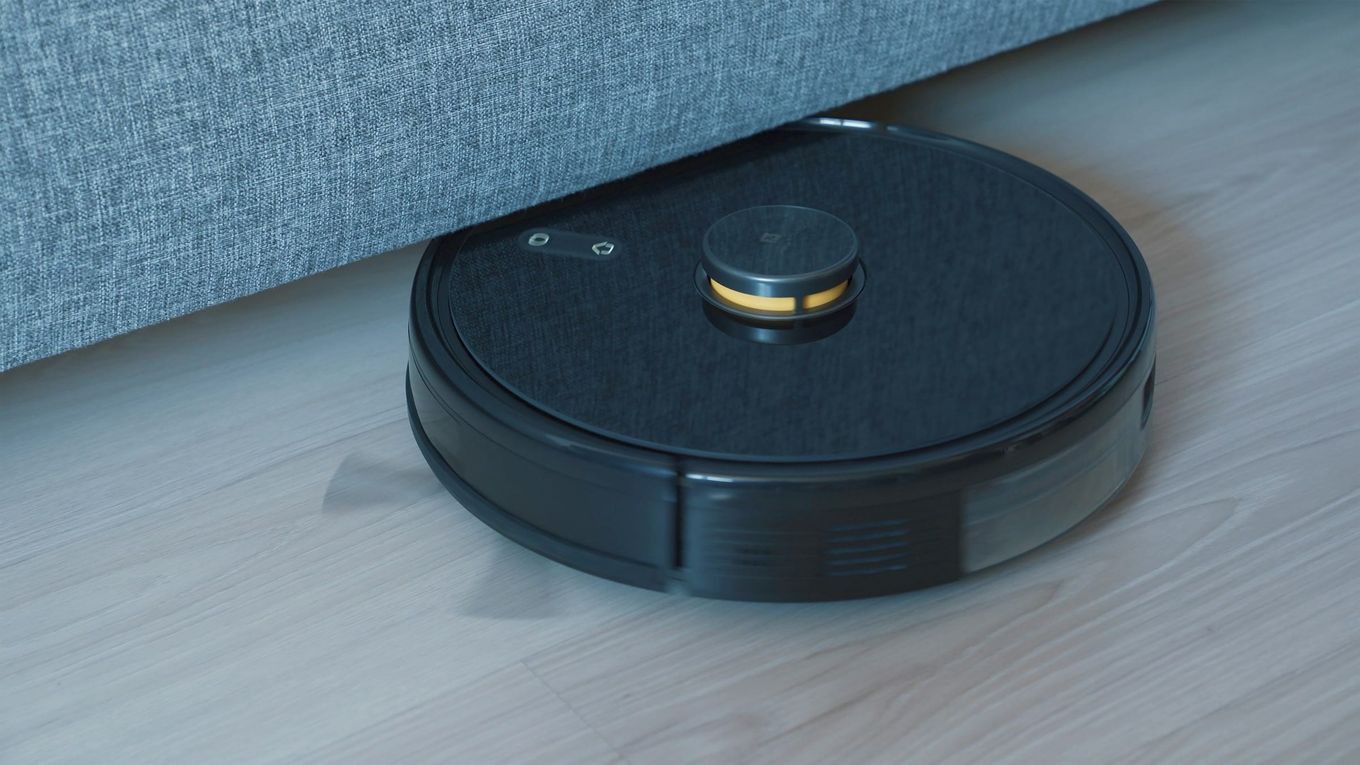
Robot-vacuum rollers, including rollers driven by a synchronous belt.
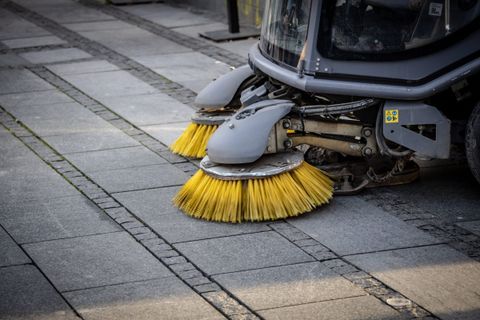
Side and edge brushes: a small spinning arm with radiating bristles that reaches past the robot’s body to clean along walls. Every robot vacuum has at least one, and a single side brush is the industry standard (RoboVacGuide).
Floor-nozzle brushes for air-driven and electric nozzles, and aftermarket sets.
Specification table for your RFQ
Send this request for quotation (RFQ) with the original part or a drawing.
| Parameter | What it means | What to state |
|---|---|---|
| Part and machine | Which part, for which models | Brush roll, side brush or nozzle strip; list every model it must fit |
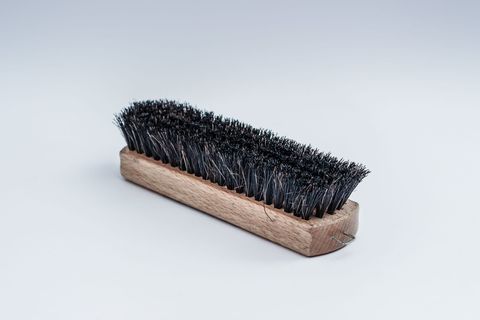
| Filament | The bristle material | Nylon (PA, polyamide), polypropylene (PP) or horsehair. Horsehair gives scratch-free dry cleaning (Gordon Brush). Nylon recovers better from bending than PP or the polyesters PBT (polybutylene terephthalate) and PET (polyethylene terephthalate) (DuPont) |
| Anti-static fibre | Filament that carries away static charge | Conductive nylon, a 6.6 nylon with a conductive coating, or carbon fibre (Gordon Brush) |
| Filament diameter and trim | Thickness and free length of the bristle | In mm; match the original, or test a stiffer and a softer option |
| Tuft pattern | How the rows run around the core | Spiral rows of bristle, rubber fins, or alternating fins and bristle strips (RoboVacGuide) |
| Core | The body the tufts sit in | Material, outside diameter, length, wall thickness |
| Drive end | Where the motor or belt engages | Socket or pulley shape and size |
| End caps and bearings | What holds the roll in the housing | Cap shape, bearing type if fitted, removable or fixed |
| Side brush layout | Arms and hub | Number and length of arms, bristle per arm, hub shape and fixing |
| Anti-tangle features | Ways to stop hair wrapping | Blade or comb in the housing; no brush is truly tangle-proof, so test claims (RoboVacGuide) |
| Tolerances | How exactly it must fit | Overall length, outside diameter, runout, drive-end fit |
| Tuft retention | Force before a tuft pulls out | Borrow the toothbrush method of ISO 20126, from the International Organization for Standardization: one tuft pulled at 20 mm/min, minimum 15 N (Mecmesin) |
What you can customise and what drives the price
Filament, colour, core, end caps, side-brush arms, retail card and spare-parts kits are all open. Tooling is the largest variable: a new core or end-cap mould for a model the factory has not made before is a one-time cost, while parts already in its range need none. Filament follows: brushes are filled by volume, so a denser filament puts more material into every roll (DuPont), and specialist fibres add to that. Quantity spreads setup and mould costs; kits that share a core across several models keep tooling down.
Customs code and duty
In the HS (Harmonized System) customs code, brushes are heading 9603; the EU’s eight-digit version is the CN (Combined Nomenclature). A brush that forms part of an appliance goes to CN 9603 50 00, “other brushes constituting parts of machines, appliances or vehicles”, which carried a 2.70 percent third-country duty in TARIC, the EU’s online integrated tariff database, on 12 November 2026 (TARIC). Japan Customs put a brush that attaches to a vacuum-cleaner hose, presented on its own, under 9603.50 as a vacuum-cleaner part, citing Note 1(o) to Section XVI and heading 96.03 (Japan Customs). Ask your customs broker to confirm the code for each part.
EU rules
CE marking applies only where a harmonised EU rule requires it (Your Europe); a brush roll or side brush with no electrical parts is outside those rules. Sold to households as a spare part, it is a consumer product under the General Product Safety Regulation (EU) 2023/988: it needs a type or batch number, the manufacturer’s name and address, and an EU-based responsible person (EUR-Lex). The European power-brush safety standard EN 1083-2:2024 excludes brushes for vacuum cleaners (EVS).
Selling a compatible part under your own brand
We source parts under your brand only. Under Article 14(1)(c) of the EU trade mark regulation, the owner of an EU trade mark cannot stop a third party from using that mark to identify or refer to the owner’s goods, in particular where this is necessary to indicate the intended purpose of a product, “in particular as accessories or spare parts”. Article 14(2) adds that this applies only where the use is “in accordance with honest practices in industrial or commercial matters” (Article 14). Check your listing wording with your own counsel.
Factory checks
We confirm the licence and export record and see the tufting line. Samples are checked against the original part. We visit mid-run, and a pre-shipment inspection measures length, diameter and drive ends before packing.
Questions buyers ask
Can you copy a roll from a sample? Yes, from the original part or a drawing, with the machine model.
Do we need new tooling for every model? Only where the core or end caps differ from parts the factory already makes.
How long until we have stock? For non-electrical parts with an existing specification, samples take two to three weeks and production typically four to six weeks, plus sea freight.
Can a price check come first? Yes. Our benchmark report is EUR 199 per product, charged only if we beat your current price. Other fees are on our pricing page and compared in our agent fees guide.
OEM or ODM? We source white-label and ODM (original design manufacturer: the factory’s design under your brand) parts. The private label guide explains the difference between the two.
Sources
- RoboVacGuide: Robot vacuum brush types
- Gordon Brush: Bristle brush material descriptions (reprint)
- DuPont: Tynex A abrasive filament technical guide (2015)
- Mecmesin: Toothbrush tester for bristle stiffness and pull-out resistance
- EU TARIC: measures for 9603 50 00, reference date 12 November 2026
- Japan Customs: classification example, brush for vacuum cleaner attachment (9603.50)
- EVS: EN 1083-2:2024 Power-driven brushes, Part 2: Safety requirements
- Your Europe: CE marking
- Regulation (EU) 2023/988 on general product safety (EUR-Lex)
- Regulation (EU) 2017/1001 on the EU trade mark, Article 14 (EUR-Lex)