Aslan sources wood- and bamboo-handle household brushes and pet grooming brushes from a brush manufacturer in Suzhou that we work with directly, for retailers, distributors and pet brands that sell under their own label. We charge the buyer 4 to 8 percent of order value and take nothing from the factory.
What the range covers
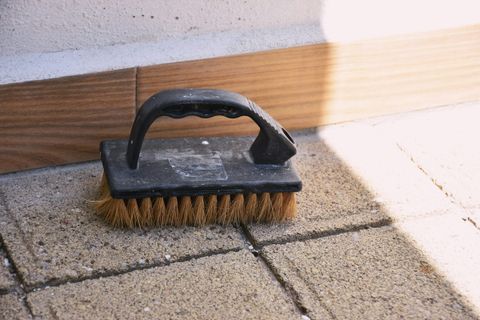
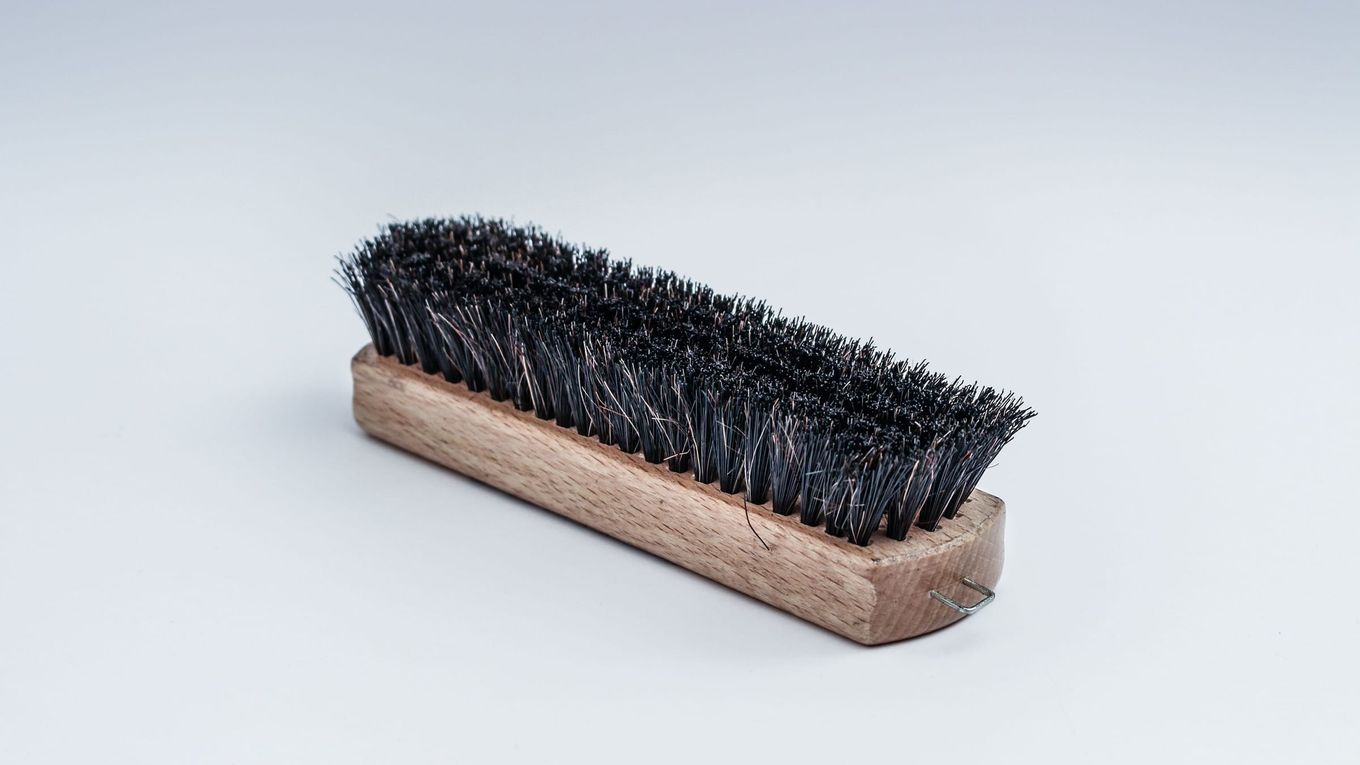
Household brushes: bath, shoe and floor brushes, and gift lines, on wood or bamboo. The factory drills the block and tufts each hole, a method the trade calls staple-set: filament tufts anchored into a solid block with stainless steel or wire staples (Carolina Brush).
Pet grooming brushes, with steel, elastic, wood or plastic pins, or plastic filament. A retail guide from D for Dog describes three common types and notes that the right brush depends on the coat. Slicker brushes have tightly packed fine wire bristles for tangles in medium and long fur, and must be used gently. Pin brushes put a protective ball on the end of each pin, so they are kinder to skin. Bristle brushes finish the coat and add shine.
Specification table for your RFQ
Add this to your request for quotation (RFQ) together with a photo or sample.
| Parameter | What it means | Options and facts |
|---|---|---|
| Handle and block | The wooden or bamboo body | Species, finish, shape, dimensions; logo by laser, print or hot stamp |
| Natural filament | Animal or plant fibre | Horsehair: soft to slightly stiff, scratch-free, used for shoe-shine and dusting brushes. Hog bristle: naturally split tip, excellent durability and water resistance. Tampico: works wet or dry, resists heat, acid and alkali (Gordon Brush) |
| Synthetic filament | Nylon or polypropylene | Nylon (PA, polyamide) for bend recovery; polypropylene (PP) keeps its stiffness wet or dry and costs less (Precision Brush) |
| Filament diameter and trim | Thickness and exposed length | In mm; a sample is the clearest way to fix both |
| Tuft pattern and density | Holes per row and rows per block | Count from a sample or give a hole drawing |
| Staple wire | What anchors the tufts | Stainless steel or other wire (Carolina Brush) |
| Pins (pet) | The working teeth | Steel, elastic, wood or plastic; ball tips or bare; pin length and spacing; cushion material |
| Tuft or pin retention | Force before a tuft or pin pulls out | ISO 20126, the International Organization for Standardization’s toothbrush standard, pulls one tuft at 20 mm/min and requires 15 N or more (Mecmesin); agree a similar test |
| Labelling | What the consumer sees | Your brand, a type or batch number, the manufacturer’s name and postal and electronic address (General Product Safety Regulation, Article 9), care text |
What you can customise and what changes the price
Shape, wood, finish, filament, colour, logo and packaging are all open. Three things move the price. A new handle shape can need its own mould or cutting setup. Natural fibres sit in a different price band from synthetics; horsehair, for example, is a medium- to high-cost material (Gordon Brush). Order size spreads setup across more pieces.
Customs code and duty
All brushes fall under heading 9603 of the HS (Harmonized System) code, which the EU extends to the eight-digit CN (Combined Nomenclature) code. CN 9603 90 91 names “household type brooms and brushes, including shoe brushes and clothes brushes; brushes for grooming animals” (TARIC). Bath and body brushes used on the person go to 9603 29 80 (TARIC). Both carried a third-country duty of 3.70 percent in TARIC, the EU’s online integrated tariff database, on 12 November 2026. Have a customs broker confirm the code for each item.
EU rules
A brush with no electrical parts carries no CE marking, which is reserved for products under harmonised EU rules that require it (Your Europe). Household and pet brushes are consumer products under the General Product Safety Regulation (EU) 2023/988, so the importer checks the safety file, the batch number and the manufacturer’s details before sale (Article 11). Under REACH, the EU chemicals regulation, articles for the general public may not contain more than 1 mg/kg of any listed PAH (polycyclic aromatic hydrocarbon) in rubber or plastic parts that come into direct and prolonged, or short-term repeated, contact with the skin or mouth. The rule names household utensils and tools for domestic use among its examples (Regulation 1272/2013), so it reaches plastic grips and rubber pads.
How the factory is checked
Licence and export history first, then the drilling and tufting line itself. Samples are compared with yours piece by piece. During the run we visit the line; at the end comes a pre-shipment inspection with photos and counts.
Questions buyers ask
Can you match the brush on our shelf today? Send a photo, your price and yearly volume. The EUR 199 benchmark report is charged only if we find a lower factory price.
Can we put our logo on the wood? Yes. State the method and position in the RFQ, and approve it on the samples.
Is there a minimum order? Our buyers order enough to fill part of a container or more, and order again. For smaller volumes a European wholesaler is usually the better deal.
How fast is a first order? With a set specification: samples in two to three weeks, production typically four to six weeks, then sea freight.
Can you source a branded grooming brush? No. We source white-label and ODM (original design manufacturer: the factory’s design under your brand) goods only; the private label guide explains why. Our fees are on the pricing page, and the agent fees guide compares them with other agents.
Sources
- Carolina Brush: Custom staple-set brushes
- Gordon Brush: Bristle brush material descriptions (reprint)
- Precision Brush: Brush filament options
- D for Dog: The best dog brush for your dog
- Mecmesin: Toothbrush tester for bristle stiffness and pull-out resistance
- EU TARIC: measures for 9603 90 91, reference date 12 November 2026
- EU TARIC: measures for 9603 29 80, reference date 12 November 2026
- Your Europe: CE marking
- Regulation (EU) 2023/988 on general product safety (EUR-Lex)
- Commission Regulation (EU) No 1272/2013 amending REACH Annex XVII on PAHs (EUR-Lex)