Private label means a factory makes the product and you sell it under your own brand. OEM and ODM describe who did the design: with OEM (original equipment manufacturing) the factory builds to your design, and with ODM (original design manufacturer) you put your brand on a design the factory already has.
White label is the least customised version: a standard product that several buyers sell under their own names. Which model you choose decides who owns the design and the moulds, who else can sell the same product, and what you must put in writing. This guide is general information and does not constitute legal advice.
Four terms in plain words
Private label. Alibaba’s seller blog defines it as products “manufactured by one company but sold under another company’s brand name”, made for one specific retailer with its own branding and packaging (Alibaba.com).
White label. The same source describes white-label goods as generic products produced for multiple retailers, each selling them under its own name with little customisation.
OEM. The European Commission’s China IP SME Helpdesk, which advises small and medium-sized enterprises (SMEs) on intellectual property (IP) in China, uses OEM for the agreement where one company commissions another to make products to set specifications and “affix a trade mark on such products”, which the commissioning company then sells under its own name (China IP SME Helpdesk). You bring the design; the factory builds it.
ODM. In trade usage, the factory has already developed the product. You choose it from the factory’s range, adjust details such as colour, material or packaging, and sell it under your brand.
| White label | ODM / private label | OEM | |
|---|---|---|---|
| Who owns the design and tooling | The factory | The factory, unless the contract transfers it | You, if the contract says so; tooling belongs to whoever the contract names |
| Typical customisation | Your logo and packaging | Colours, materials, details, packaging | Everything, to your drawings |
| Who else can buy the same product | Any buyer | Other buyers, unless you agree exclusivity | Nobody, if the contract holds |
| Legal position in the European Union (EU) | You are the manufacturer under product safety law | Same | Same |
Why you cannot buy another brand’s product from its factory
Many factories make goods for well-known brands. Buying that brand’s product from the factory and selling it in Europe is trade mark infringement.
Under the EU trade mark regulation, the owner of an EU trade mark can stop anyone acting without consent from using an identical sign on identical goods, including putting goods on the market and importing them under that sign (Regulation (EU) 2017/1001, Article 9(2) and (3)). The owner loses that right only for goods put on the market in the European Economic Area (EEA), the EU single market area, by the owner or with its consent (Article 15(1)). Goods taken from the brand’s factory in China have no such consent.
Brands also write this risk into their contracts. The China IP SME Helpdesk advises that an OEM contract should require overproduction to stop and excess or defective goods to be destroyed at the factory’s expense. So a factory offering “the same product as brand X” is offering you a legal problem. Aslan sources white-label and ODM products only, never a brand the buyer does not own. That a factory produces for a known brand is still a useful sign of its quality level.
Tooling and moulds: put ownership in writing
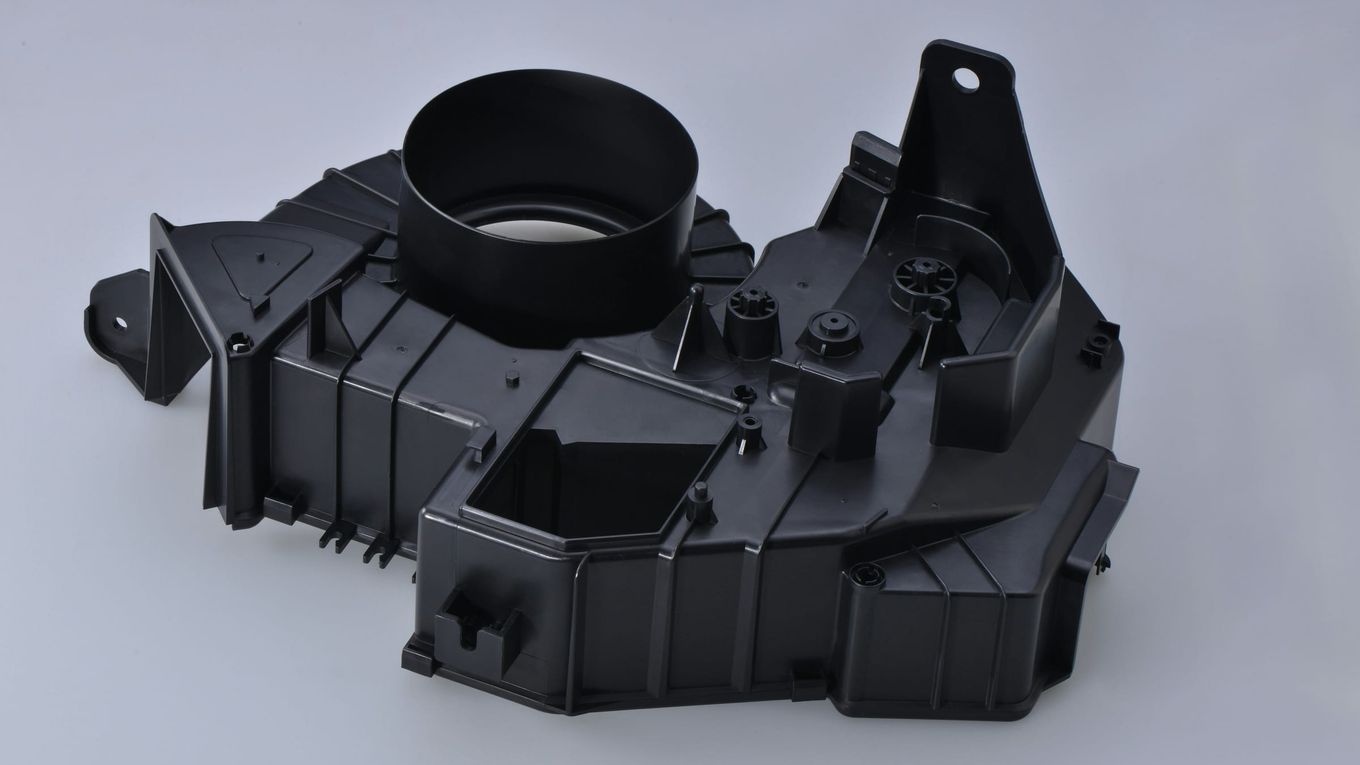
Tooling means the moulds, dies and fixtures made for one product. For a brush with a custom handle or a moulded bucket, the mould is made for your order, and someone pays for it.
The China IP SME Helpdesk calls tooling disputes “among the most common sources of contention” in manufacturing agreements and notes that manufacturers often refuse to return tooling unless compelled, for example by a significant lump-sum penalty. Its guide recommends that the contract:
- defines the product in detail, with drawings and, where relevant, the moulds and tools validated by you;
- states who owns any prototype made from your design;
- sets out what happens on termination, including stock and records;
- uses a Chinese-language version as the official text, prepared by legal counsel with adequate Chinese skills, with an English translation for you;
- names an arbitration centre for disputes, such as CIETAC (the China International Economic and Trade Arbitration Commission).
The same guide stresses that China grants trade marks to the first party to file, so you should register your mark in China before you start OEM production. It reports a 2019 Supreme People’s Court ruling that OEM goods made purely for export can still infringe a trade mark that someone else has registered in China.
For an ODM product, ask directly whether you are paying for a new mould or using the factory’s existing one. If you pay for it, the contract should list each mould, state that you own it, and say how it is returned or destroyed when the relationship ends.
Who is the manufacturer in EU law
Once your name is on the product, EU law treats you as its manufacturer. The General Product Safety Regulation (GPSR), Regulation (EU) 2023/988, applies from 13 December 2024 to products intended for, or likely to be used by, consumers (EUR-Lex, Articles 3(1) and 52).
- Article 3(8) defines a manufacturer as anyone who makes a product, or has it designed or manufactured, and markets it under its own name or trademark.
- Article 13(1) says a person who places a product on the market under its own name or trademark is deemed the manufacturer and takes on the obligations in Article 9.
- Article 9(2) and (3) require an internal risk analysis and technical documentation, kept for 10 years.
- Article 9(6) requires your name, registered trade name or registered trade mark, and postal and electronic address on the product, or on its packaging or an accompanying document where that is not possible.
- Article 16(1) requires an economic operator established in the EU to be responsible for each product.
This applies equally to white label, ODM and OEM goods. Our guide to the GPSR responsible person for imported cleaning tools covers the practical steps.
MOQ: why factories set a minimum
MOQ (minimum order quantity) is the smallest order a factory will accept for one item. It exists because part of the cost of a run is fixed: setting up the line, changing moulds, buying raw material in the supplier’s lot sizes, and printing packaging with your brand. The factory spreads those costs over your order.

The more of the product that is yours alone, such as a custom mould, a special colour or printed packaging, the more fixed cost there is to spread. You can usually lower an MOQ by using the factory’s standard colours, standard packaging with your label, or by paying tooling separately. Ask for the MOQ per item, per colour and per packaging version, since each can have its own minimum.
Checklist for a first own-brand order
- Your trade mark is registered in the EU markets you sell in and in China.
- You know whether the product is white label, ODM or OEM, and who owns the design.
- A tooling clause lists each mould, its owner and its return on termination.
- The contract has a Chinese-language official version and names an arbitration centre.
- Overproduction and rejected goods are destroyed at the factory’s cost.
- The label carries your name and postal and electronic address under GPSR Article 9(6).
- Your risk analysis and technical documentation exist before the goods ship.
- An EU-based responsible person is named for the product.
- MOQ is confirmed per item, colour and packaging version.
- A sample from the production line is approved, and a pre-shipment inspection is booked.
Sources
- Alibaba.com seller blog: What is a private label? (27 December 2024)
- European Commission, China IP SME Helpdesk: Guide to IPR protection in China for the OEM industry (30 June 2022)
- Regulation (EU) 2017/1001 on the European Union trade mark, EUR-Lex
- Regulation (EU) 2023/988 on general product safety, EUR-Lex