A pre-shipment inspection is a visit to the factory once your order is finished and mostly packed, where an inspector pulls a random sample and checks it against your specification. AQL (acceptance quality limit) sampling decides how many units the inspector checks and how many defects the lot may contain before it fails, and inspection firms in China publish starting rates of 268 to 299 US dollars (USD) per inspector-day.
This guide is general information and does not replace legal advice. Published prices change, so confirm them with the provider before you book.
The four inspections and when each happens
Inspection firms sell checks at four points in production.
| Inspection | When it happens | What it catches |
|---|---|---|
| Initial production check (pre-production) | “From pre-production through the first 20% of the production progress” (QIMA) | Wrong raw materials, wrong bristle or tube, artwork errors before the whole run is made |
| During production inspection | “When at least 20% of your order is complete” (QIMA) | Defects that repeat on the line, delays against the ship date |
| Pre-shipment inspection | Production finished and “at least 80% of goods packed into cartons” (V-Trust) | Workmanship, function, measurements, packing and marking on the finished lot |
| Container loading check | At loading, before the container leaves (QIMA) | Short quantities, damaged cartons, a dirty or damp container |
The pre-shipment inspection is the one that decides whether you pay the balance. QIMA places it “before final payment or shipment” (QIMA) and says a loading check “should not be relied upon as a substitute” for it (QIMA).
What AQL means and which standard sets it
AQL stands for acceptance quality limit, often called acceptable quality limit. Inspectors use it to set “the maximum acceptable number of defective items in a sample batch” (QIMA).
The tables come from ISO 2859-1, the standard of the International Organization for Standardization (ISO) for sampling by attributes, which means each unit is judged good or defective. Its third edition, ISO 2859-1:2026, was published in January 2026 and replaced the 1999 edition, which ISO now lists as withdrawn. Some inspection firms print tables from the American equivalent, ANSI/ASQ Z1.4, issued through the American National Standards Institute (ANSI) by the American Society for Quality (ASQ): QIMA says its tables are based on the 2008 edition of Z1.4 (QIMA). The charts used below state they follow “ISO 2859-1 / ANSI/ASQ Z1.4” (ApparelSearch).
Two settings drive every plan:
- Inspection level. General levels I, II and III, and special levels S-1 to S-4 “for situations where testing is destructive or very costly” (ApparelSearch). V-Trust calls the general level the primary one (V-Trust), and level II is the one used in the examples below. For a lot of 3,201 to 10,000 units, level I means checking 80 pieces, level II 200 and level III 315 (ApparelSearch).
- AQL value per defect class. Each class of defect gets its own limit.
How to read the tables, with a worked example
Reading a plan takes two lookups. Table A turns lot size and inspection level into a code letter. Table B turns the code letter and AQL into a sample size, an accept number (Ac) and a reject number (Re).
QIMA’s own example: “A shipment of 4,000 units inspected at General Inspection Level II gives code letter L.” Then “code letter L at AQL 2.5 requires a sample of 200 units. If 10 or fewer units fail, the batch passes. If 11 or more fail, the batch is rejected” (QIMA).
Applied to an order of 4,000 deck brushes, with the defaults V-Trust suggests for low and medium value goods (V-Trust):
| Defect class | AQL | Sample | Accept if defects ≤ | Reject if defects ≥ |
|---|---|---|---|---|
| Critical | 0 | 200 | 0 | 1 |
| Major | 2.5 | 200 | 10 | 11 |
| Minor | 4.0 | 200 | 14 | 15 |
The major line is QIMA’s example. The minor line comes from the 4.0 AQL chart, which gives 200 pieces, accept 14, reject 15 for lots of 3,201 to 10,000. Zero critical defects is common practice: QIMA notes the “AQL for critical defects is typically 0”. A smaller order of 1,201 to 3,200 units drops to code K, a sample of 125 and accept 7, reject 8 at AQL 2.5 (ApparelSearch).
Each class has its own accept and reject numbers. Write into the contract that the lot fails if any one class reaches its reject number.
Critical, major and minor defects on brushes and poles
QIMA defines critical defects as “safety or compliance failures”, major defects as those that “affect product function or appearance significantly and would likely cause a return”, and minor defects as “small cosmetic issues that don’t affect function” (QIMA). Your specification should list examples per class, because the inspector classifies by your list.
| Class | Deck brush | Telescopic pole |
|---|---|---|
| Critical | Exposed wire or staple from the tufting that can cut a hand | Sharp burr on a cut tube end; lock that releases under load so the pole collapses |
| Major | Tufts pulling out in a pull test; thread that will not seat on the pole; wrong bristle stiffness | Length short of spec; lock slips; corrosion on aluminium |
| Minor | Slight colour difference between heads; small mould flash | Light scratch on the anodised finish; label slightly off centre |
Agree a signed reference sample with the factory before production. The inspector compares against it.
What an inspection report contains
A useful report gives a single verdict (pass, fail or pending your decision) and the evidence behind it. V-Trust’s pre-shipment checklist covers quantity, appearance, performance and function tests, workmanship, assembly, accessories, material, colours and logo, size and measurements, weight, assortment, carton condition, barcode scan, packing and marking, shipping marks and warehouse condition (V-Trust).
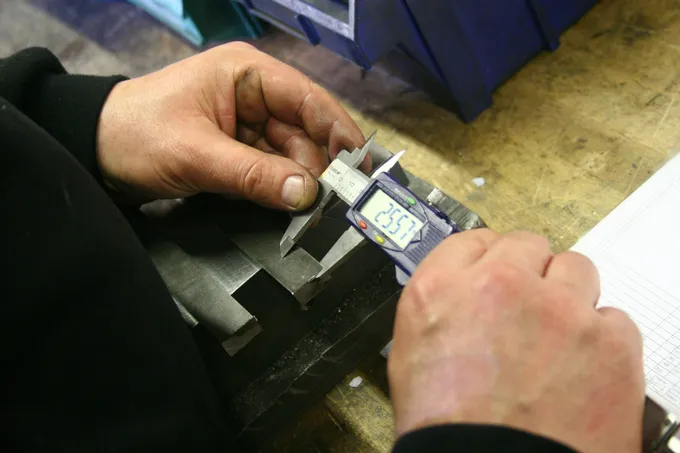
It should state the lot size, sample size and AQL used, count each defect by class with photos, and record measurements against your drawing. V-Trust issues reports “within 24 hours after each inspection”.
What inspections cost in China
Prices are quoted per man-day: one inspector on site for one day. Checked on 13 November 2026:
| Provider | Service | Price as published | Travel |
|---|---|---|---|
| Sofeast | Product inspections | “from 299 USD/man-day (depending on product type and inspection)” | Not stated |
| Sofeast | Factory audits | “from 279 USD/man-day” | Not stated |
| V-Trust | Inspections, China | “268 USD/Man-day (all inclusive)” in highlighted areas, “298 USD/Man-day (all inclusive)” elsewhere | “No extra charge for travel expenses” |
| QC Advisor | Inspections and audits | “starts at USD 280 per man-day across most of Asia” | “In Mainland China, the rate is all-inclusive” |
| QIMA | Inspections and audits, China | Says “All-inclusive” but publishes no figure | Not stated separately |
Aslan includes in-line visits and a pre-shipment inspection in its sourcing service. For buyers who only want a check, it charges a day rate quoted in advance, with travel at cost and a report within 48 hours of the visit (pricing). For how commissions and day rates compare across agents, see what a China sourcing agent costs.
Inspection and factory audit: two different questions
An inspection asks whether this lot of goods is good. A factory audit asks whether this factory can make good goods again and again.
| Product inspection | Factory audit | |
|---|---|---|
| Looks at | A sample of your finished goods | The factory itself |
| Covers | Defects, measurements, function, packing | “Factory profile”, “Production capacities”, machinery condition, “Workflow and organization charts”, “Quality assurance systems in place” (QIMA) |
| When | Every order | Before the first order, then periodically |
| Result | Pass or fail for one shipment | A view of the supplier and a list of corrections |
Do the audit before the deposit. Our guide to verifying a Chinese supplier covers the checks you can run from your desk first.
Contract terms that give a failed inspection consequences
An inspection only protects you if the purchase contract ties money and dates to it. Write in:
- The standard and the plan. ISO 2859-1, general inspection level II, and the AQL per class, for example 0 critical, 2.5 major, 4.0 minor.
- The reference. Your specification, drawing and the signed reference sample.
- Your choice of inspector. You or your agent appoint the inspector, and the factory gives full access.
- Payment. The balance falls due only after a pass report or your written release.
- A failed result. The factory sorts or reworks the lot at its cost, pays for the re-inspection, and keeps the agreed ship date or pays a stated delay penalty.
- No shipment without release. Goods loaded before a pass or a written release are at the factory’s risk.
For brush-specific specifications, see how to source deck brushes from China.
Sources
- ISO 2859-1:2026 Sampling procedures for inspection by attributes, Part 1
- QIMA: Acceptance Quality Limit (AQL)
- ApparelSearch: 2.5 AQL chart
- ApparelSearch: 4.0 AQL chart
- V-Trust: AQL table
- QIMA: Product inspections
- QIMA: Initial Production Check
- QIMA: During Production Inspection
- QIMA: Container Loading Check
- V-Trust: Pre-shipment inspection
- QIMA: Manufacturing audit
- Sofeast: Pricing
- V-Trust: Quality control and inspection services in China
- QC Advisor: Pricing and costs
- QIMA: Quality control in China