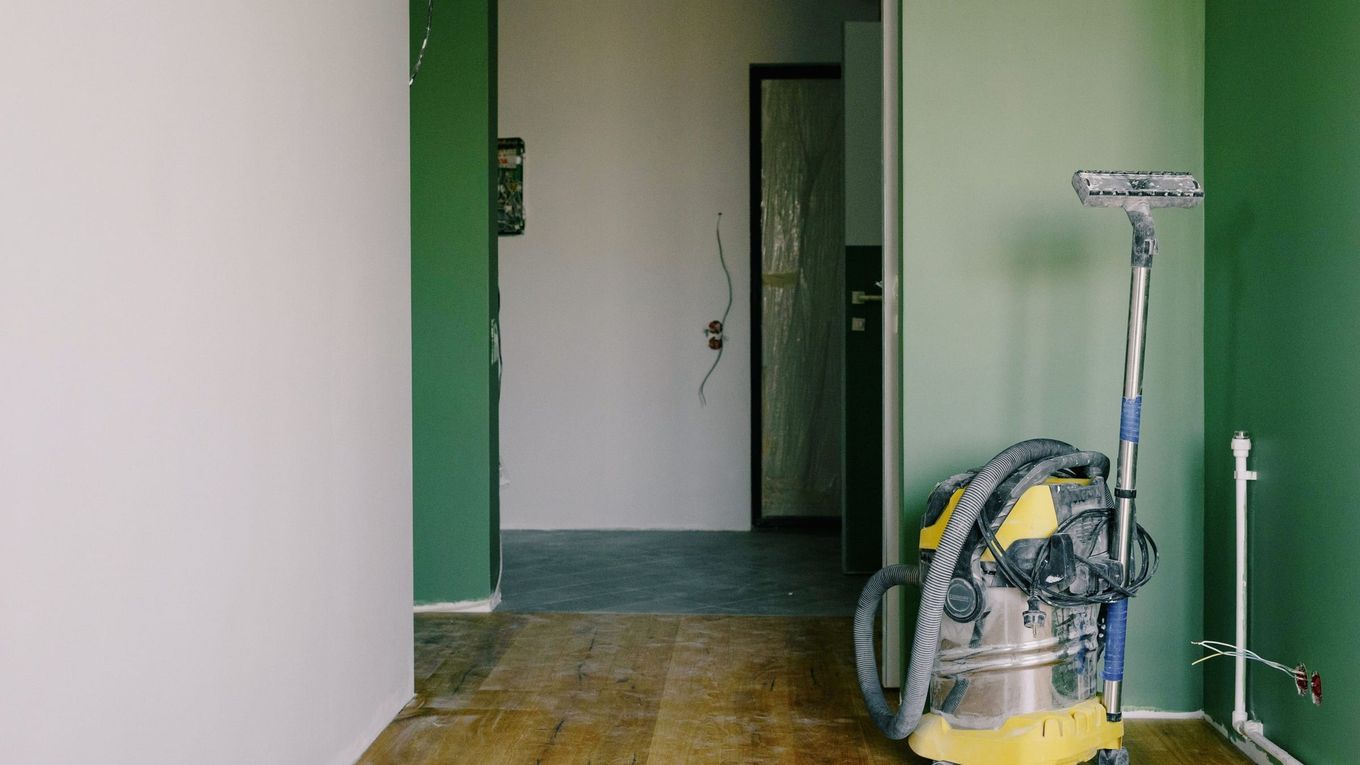
Aslan Sourcing, a European-run sourcing agency in Suzhou and Shenzhen, sources wet and dry boat vacuums on 12 volts (12 V), cordless wet and dry vacuums and wet and dry shop vacs for marinas and yards under your own brand, from a 700-person vacuum manufacturer in China that we work with directly. Only the buyer pays us, a published commission of 4 to 8 percent of order value; the factory invoices the goods to you as importer of record, and EU compliance is priced into the quote from the first number.
Vacuums take longer than non-electrical goods such as brushes because of the compliance file.
Specification table for a request for quotation
Copy these rows into your RFQ (request for quotation).
| Parameter | What to state | What it means |
|---|---|---|
| Power source and voltage | 12 V DC socket, battery pack voltage, or 230 V AC mains | Sets the EU safety law. DC: direct current; AC: alternating current. |
| Motor type | Brushed or BLDC | A BLDC (brushless direct-current) motor switches electronically, with no brushes to wear; the electronics add cost (DigiKey). |
| Rated power | Watts | Above 1,500 W the customs code changes. |
| Suction and airflow | kPa and litres per second, with test method | kPa (kilopascal) is a unit of pressure. IEC 62885-2, a standard of the IEC (International Electrotechnical Commission), sets performance tests for household dry vacuums, cordless included. |
| Tank volume | Total and usable liquid litres | Over 2.5 litres of liquid makes it “wet and dry” in EU ecodesign law; over 20 litres changes the customs code. |
| Wet and dry capability | Liquid pick-up, full-tank cut-off, drain | Checked at inspection. |
| Filtration | Filter class and standard, washable or not | HEPA (high-efficiency particulate air) is a class in the European standard EN 1822-1:2019: classes H13 and H14, rated at the most penetrating particle size. “HEPA-type” names no class. |
| Battery | Chemistry, voltage, capacity in Ah (ampere-hours) or Wh (watt-hours), charger input | Chemistry and capacity go on the EU battery label. |
| Noise | Sound power in dB(A), A-weighted decibels, with method | IEC 60704-2-1 measures dry vacuums, cordless included; on wet and dry units, the dry function only. |
| Plug and cable | Plug per destination country, cable length | For 12 V boat models, the socket plug and the cable length to the outlet. |
| Accessories | Hose length and diameter, nozzles, brushes | Checked at inspection. |
| Packaging | Branded box, cartons per pallet, label languages | Manufacturer name and addresses go on product or packaging. |
Which EU rules apply, and the documents you hold
This is general information and does not replace legal advice. Which acts apply depends on the voltage, the battery, any radio module and whether the model is sold for home or commercial use, so a test laboratory confirms them for each model.
- Low Voltage Directive 2014/35/EU (LVD) covers equipment rated 50 to 1,000 V AC or 75 to 1,500 V DC (Article 1). A 12 V DC vacuum, or a cordless one on a pack below 75 V, falls outside that range. A mains charger or a 230 V shop vac falls inside it.
- Machinery rules. Directive 2006/42/EC, Article 1(2)(k), excludes household appliances intended for domestic use “insofar as” the LVD covers them. The Commission’s guide, sections 63 and 64, names vacuum cleaners as household appliances and states that housekeeping appliances intended for commercial or industrial use, such as a marina shop vac, are not excluded from the Machinery Directive; where such machinery runs within the LVD voltage range, it meets the LVD safety objectives through the Machinery Directive. Neither text deals directly with a household vacuum below the LVD range, such as a 12 V model. From 20 January 2027 the Machinery Regulation (EU) 2023/1230 applies; its Article 2(2)(p) keeps the household appliance exclusion, insofar as the product falls within the LVD or the Radio Equipment Directive.
- Radio Equipment Directive 2014/53/EU (RED) applies only if the vacuum intentionally sends or receives radio waves, for example through Bluetooth or Wi-Fi. Such a model must then meet the LVD safety objectives with no voltage limit, and the EMC requirements (Article 3(1)).
- EMC Directive 2014/30/EU (electromagnetic compatibility): the manufacturer issues an EU declaration of conformity and affixes the CE marking; the importer keeps the declaration 10 years (Articles 7 and 9). An importer that places the vacuum on the market under its own name or trade mark takes on the manufacturer’s obligations (Article 11).
- RoHS Directive 2011/65/EU (restriction of hazardous substances) has no lower voltage limit, so it covers 12 V equipment too (Article 3), and restricts ten substances such as lead and cadmium (Annex II as amended).
- Batteries Regulation (EU) 2023/1542: CE marking on the battery, a label with chemistry and capacity from 18 August 2026 or 18 months after the implementing act enters into force, whichever is later, producer registration in each Member State, and from 18 February 2027 portable batteries the end user can remove and replace (Articles 11, 13, 20, 55 and 96).
- WEEE Directive 2012/19/EU (waste electrical and electronic equipment): the crossed-out wheeled bin symbol and producer registration in each country you sell in (Articles 14 and 16).
- Ecodesign Regulation (EU) No 666/2013 covers electric mains-operated vacuums, hybrids included, and excludes wet, wet and dry, battery-operated, robot, industrial and central vacuums (Article 1). Our 12 V, cordless and wet and dry models are out of scope today; the Commission’s vacuum cleaner page points to ongoing review initiatives.
- General Product Safety Regulation (EU) 2023/988 (GPSR), in application since 13 December 2024, covers consumer-product risks the acts above leave open. For products under those acts, its chapter on manufacturers, importers and the responsible person does not apply (Article 2(1)). The requirement for an economic operator established in the EU comes from Article 4 of Regulation (EU) 2019/1020, which lists the Machinery, EMC, RoHS, LVD and Radio Equipment directives.
Test reports usually follow IEC 60335-2-2 for household vacuums, battery-operated ones included, or IEC 60335-2-69 for commercial wet and dry vacuums. Before the goods land, hold the declaration of conformity, the technical file, battery and WEEE registrations, and instructions in each market’s language. Detail: CE compliance for boat vacuums.
Customs code and EU duty
Vacuums fall under heading 8508 of the Harmonized System (HS) and the EU Combined Nomenclature (CN). TARIC, the EU tariff database, showed for goods from China on 13 November 2026:
| CN code | Covers | Duty |
|---|---|---|
| 8508 11 00 | Self-contained motor, up to 1,500 W, container up to 20 l | 2.20 % |
| 8508 19 00 | Other vacuums with self-contained motor | 1.70 % |
Your customs broker confirms each code.
What Aslan checks
We check the business licence, export history, the line that makes your vacuum and the certification file. We check samples against your specification, visit the line during production and run a pre-shipment inspection with photos, measurements and a report before the container is sealed. Vacuums can share a container with our marine cleaning range. Fees are on the pricing page.
Questions buyers ask
Does a 12 V boat vacuum need CE marking if the LVD does not apply? Yes. The EMC and RoHS directives still apply, and each requires it.
Are cordless and wet and dry vacuums under the EU ecodesign rules for vacuums? Not today: Regulation 666/2013 excludes them. Check for a replacement act before each order.
Who carries the compliance responsibility? You, as importer of record. A vacuum sold under your own brand also puts the manufacturer’s obligations on you (EMC Directive, Article 11). We help with the paperwork, including the EU responsible economic operator.
Can you get a branded vacuum from the factory? No. We source white-label and ODM (original design manufacturer) products only, never a brand you do not own.
Sources
- Directive 2014/35/EU (Low Voltage Directive), EUR-Lex
- Directive 2014/30/EU (EMC Directive), EUR-Lex
- Directive 2014/53/EU (Radio Equipment Directive), EUR-Lex
- Directive 2011/65/EU (RoHS), EUR-Lex
- Commission Delegated Directive (EU) 2015/863 amending RoHS Annex II, EUR-Lex
- Directive 2006/42/EC (Machinery Directive), EUR-Lex
- Regulation (EU) 2023/1230 (Machinery Regulation), EUR-Lex
- European Commission: Machinery (application dates and guide)
- European Commission: Guide to application of the Machinery Directive 2006/42/EC, edition 2.3, April 2024
- Regulation (EU) 2023/1542 (Batteries Regulation), EUR-Lex
- Directive 2012/19/EU (WEEE), EUR-Lex
- Commission Regulation (EU) No 666/2013 (ecodesign, vacuum cleaners), EUR-Lex
- European Commission: Energy-efficient products, vacuum cleaners
- Regulation (EU) 2023/988 (General Product Safety Regulation), EUR-Lex
- Regulation (EU) 2019/1020 (market surveillance and compliance of products), EUR-Lex
- TARIC measures, CN 8508 11 00, origin China, reference date 13 November 2026
- TARIC measures, CN 8508 19 00, origin China, reference date 13 November 2026
- IEC 60335-2-2:2026, safety of household vacuum cleaners and water-suction cleaning appliances
- IEC 60335-2-69:2021, safety of wet and dry vacuum cleaners for commercial use
- IEC 62885-2:2026, performance of household dry vacuum cleaners
- EN 1822-1:2019, high efficiency air filters (EPA, HEPA and ULPA), iTeh catalogue
- EN IEC 60704-2-1, airborne noise of dry vacuum cleaners, iTeh catalogue
- DigiKey: How to power and control brushless DC motors