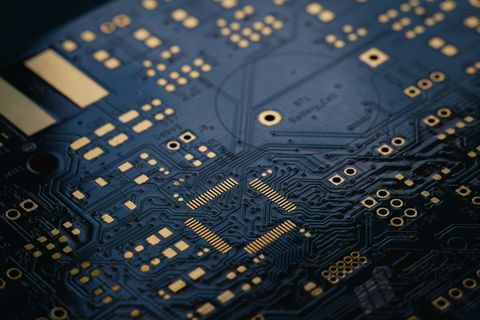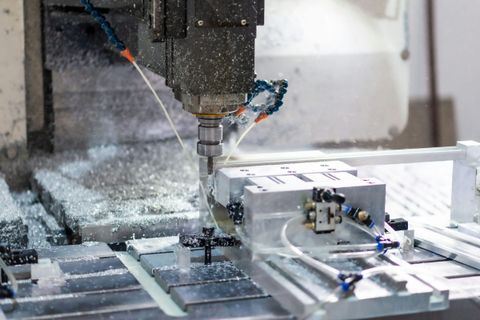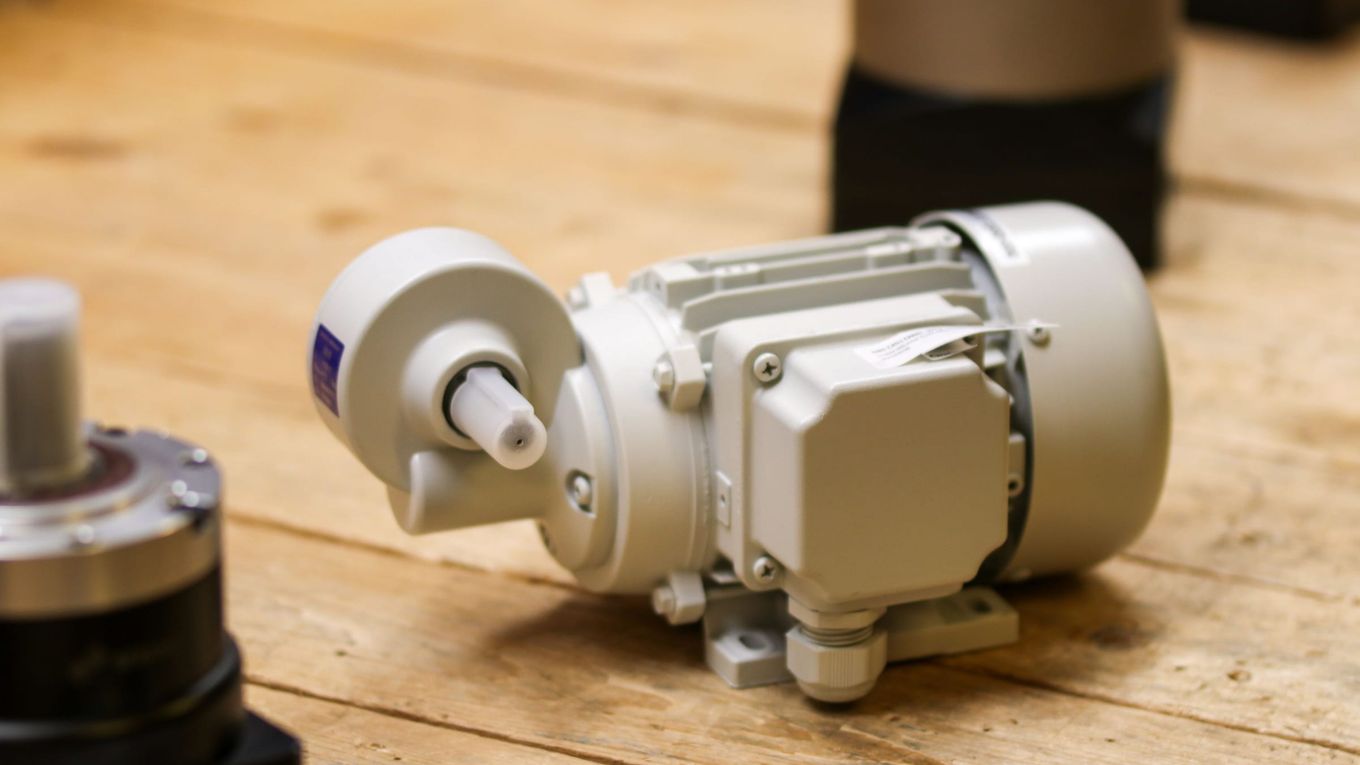
Aslan runs robotics components as a factory search project, quoted per project: it screens the factories in China that make the part, visits the shortlist, negotiates in Chinese, pulls samples and hands you a ready-to-order file. Aslan holds no standing partner factory in robotics or electronics and has no engineers, so your drawing or specification is the reference for every part: Aslan does not review parameters or designs. Visits, audits and inspections are billed at a day rate with travel at cost, and when Aslan manages the order it charges the buyer a commission of 4 to 8 percent of order value, as shown on the pricing page.
Aslan’s direct vacuum relationship covers wet and dry and cordless vacuums. Robot vacuums go through the same factory search as everything else on this page. This page is general information and does not replace legal or engineering advice.
Component families and the parameters to specify
| Component | Parameters to specify | What the source says |
|---|---|---|
| Servo actuators and joint modules | Torque, speed, reduction ratio, backdrivability | Electric actuators with high-ratio reducers trade torque, speed and size, and rigid high reduction copes poorly with force control and shock (Ficht and Behnke) |
| Harmonic reducers, also called strain wave | Ratio, backlash, rated torque | High reduction ratios with minimal backlash (2023 thesis) |
| Planetary reducers | Ratio, torque density, friction | High torque density, with possible added friction and complexity (same thesis) |
| BLDC motors and drivers | Torque, speed, control method | BLDC means brushless direct-current. With electronic commutation, output torque can be sensed and controlled through motor current (Ficht and Behnke) |
| Encoders | Sensing principle, resolution, mounting | Joint position is now usually read by high-resolution Hall-effect magnetic encoders, which have no friction in the sensing element (Ficht and Behnke) |
| LiDAR and depth cameras | Wavelength, range, field of view, scanning method, eye-safety class | LiDAR, light detection and ranging, mostly runs at 850 to 950 nm, with 905 nm the mainstream, or at 1550 nm; range is capped by eye-safety limits under IEC 60825; scanning is mechanical, MEMS mirror, flash or optical phased array (Li and Ibanez-Guzman) |
| IMUs | Sensors included, output | An IMU, inertial measurement unit, combines accelerometer, gyroscope and magnetometer readings into 3D orientation (Ficht and Behnke) |
| Battery packs | Chemistry, Wh, protections, test reports | See battery packs and power banks |
| Structural machined parts | Material, drawing tolerances, finish | Specify on your drawing |
MEMS means micro-electro-mechanical systems; nm is nanometres.
Where the industry sits in China
The International Federation of Robotics reported in September 2025 that 295,000 industrial robots installed in China in 2024, 54 percent of global demand, with Chinese suppliers holding a 57 percent share at home. Clusters sit in the Yangtze River Delta around Shanghai and in the Pearl River Delta around Shenzhen. Local figures below use different definitions and years.
| Region | City | What the source reports |
|---|---|---|
| Yangtze River Delta | Suzhou | Wuzhong district: over 1,000 robot and AI enterprises in 2023, a chain covering key robot components, body manufacturing and system integration (Suzhou Bureau of Commerce, September 2024) |
| Yangtze River Delta | Shanghai | Zhangjiang Science City launched supply chain platforms in June 2026; one says it lists over 800,000 suppliers across the robot lifecycle (Yicai, June 2026) |
| Yangtze River Delta | Hangzhou | Over 700 companies in the embodied robotics chain and 106.8 billion yuan output in 2025 (Xinhua, May 2026) |
| Pearl River Delta | Shenzhen | Over 200 robotics firms in Nanshan district’s Robot Valley; city robotics output above 240 billion yuan in 2025 (Xinhua, July 2026) |
| Pearl River Delta | Dongguan | Songshan Lake hosts a robotics base that has incubated over 80 robotics and smart hardware startups, and an institute working on lasers, sensors and machine vision (Xinhua, July 2025) |
This page names no suppliers. A factory search screens makers against your specification.
Checks when buying in low volume
- Sample policy in writing: quantity, price, and whether samples come from the production line
- Datasheet figures measured on your own bench: torque, backlash, encoder resolution, sensor range
- Communication protocol and firmware documented, with an agreed process for firmware changes
- EU export controls checked if you will ship parts or robots out of the EU
- Chinese export licence status confirmed by the supplier before you pay
- Pre-shipment inspection booked: how inspection and acceptance quality limits work
EU side. Under the Dual-Use Regulation (EU) 2021/821, exporting an item listed in Annex I needs an authorisation. Annex I includes entry 2B007 for robots with characteristics such as radiation hardening, and 7A001 for certain accelerometers. Article 4 can require authorisation for unlisted items when the authority informs the exporter of a weapons-related or embargoed military end use, and an exporter who knows of such a use must notify the authority. Check it before you export from the EU, including re-exports of a finished robot.
China side. China’s Ministry of Commerce published its Dual-Use Items Export Control List, in force since 1 December 2024, covering about 700 items. Ask the supplier whether your part is listed before ordering.
EU rules for a finished robot
- Machinery Regulation (EU) 2023/1230 applies from 20 January 2027, the date set by a corrigendum to the published text. Its Annex I, Part A, the machinery whose conformity assessment must involve a notified body, an independent assessment body designated by an EU country, lists at point 6: “Machinery that has embedded systems with fully or partially self-evolving behaviour using machine learning approaches ensuring safety functions that have not been placed independently on the market, in respect only of those systems.”
- Radio Equipment Directive 2014/53/EU covers wireless products: safety and health, electromagnetic compatibility and spectrum use. The Commission states that its cybersecurity rules have applied since August 2025.
- AI Act. Regulation (EU) 2026/1744 moved the Machinery Regulation to Section B of the AI Act’s Annex I. AI safety requirements for machinery will be added to the Machinery Regulation by delegated acts that apply by 2 August 2028.
- Customs codes depend on the exact part and its use. Leave classification to your broker.
The wider compliance picture is in EU compliance for AI wearables and connected devices.
Questions buyers ask
Does Aslan have robotics factories it works with? No. Every robotics part is a factory search project from your specification.
Can you recommend an actuator brand? No. This page names no suppliers; the search compares makers against your parameters and your samples.
Do we need an export licence to buy robot parts from China? It depends on whether the part is on China’s dual-use list. Confirm with the supplier before payment.
When does the Machinery Regulation apply? From 20 January 2027.
We need the whole product built. Where do we look? See AI hardware contract manufacturing.
Sources
- Ficht and Behnke: Bipedal Humanoid Hardware Design, a Technology Review (arXiv, 2021)
- Dynamic Multimodal Locomotion: A Quick Overview of Hardware and Control (arXiv, 2023)
- Li and Ibanez-Guzman: Lidar for Autonomous Driving (arXiv, 2020)
- IFR press release: China Tops World Record of 2 Million Factory Robots (25 September 2025)
- Suzhou Bureau of Commerce: Suzhou to pioneer development of future industry cluster (27 September 2024)
- Yicai: Zhangjiang Science City unveils new supply chain platforms (17 June 2026)
- Xinhua via Hangzhou government: national vocational training ground for embodied robots in Hangzhou (18 May 2026)
- Xinhua via Belt and Road Portal: Shenzhen's Robot Valley (1 July 2026)
- Xinhua via People's Daily Online: Songshan Lake, a microcosm of China's innovation ecosystem (14 July 2025)
- Regulation (EU) 2021/821 (Dual-Use Regulation), EUR-Lex
- Ministry of Commerce Q&A on the Dual-Use Items Export Control List, gov.cn (18 November 2024)
- Regulation (EU) 2023/1230 (Machinery Regulation), EUR-Lex
- Corrigendum to Regulation (EU) 2023/1230, OJ L 169, 4.7.2023, EUR-Lex
- European Commission: Radio Equipment Directive
- Regulation (EU) 2026/1744 (Digital Omnibus on AI), EUR-Lex