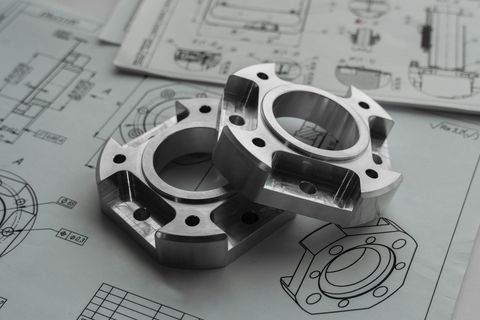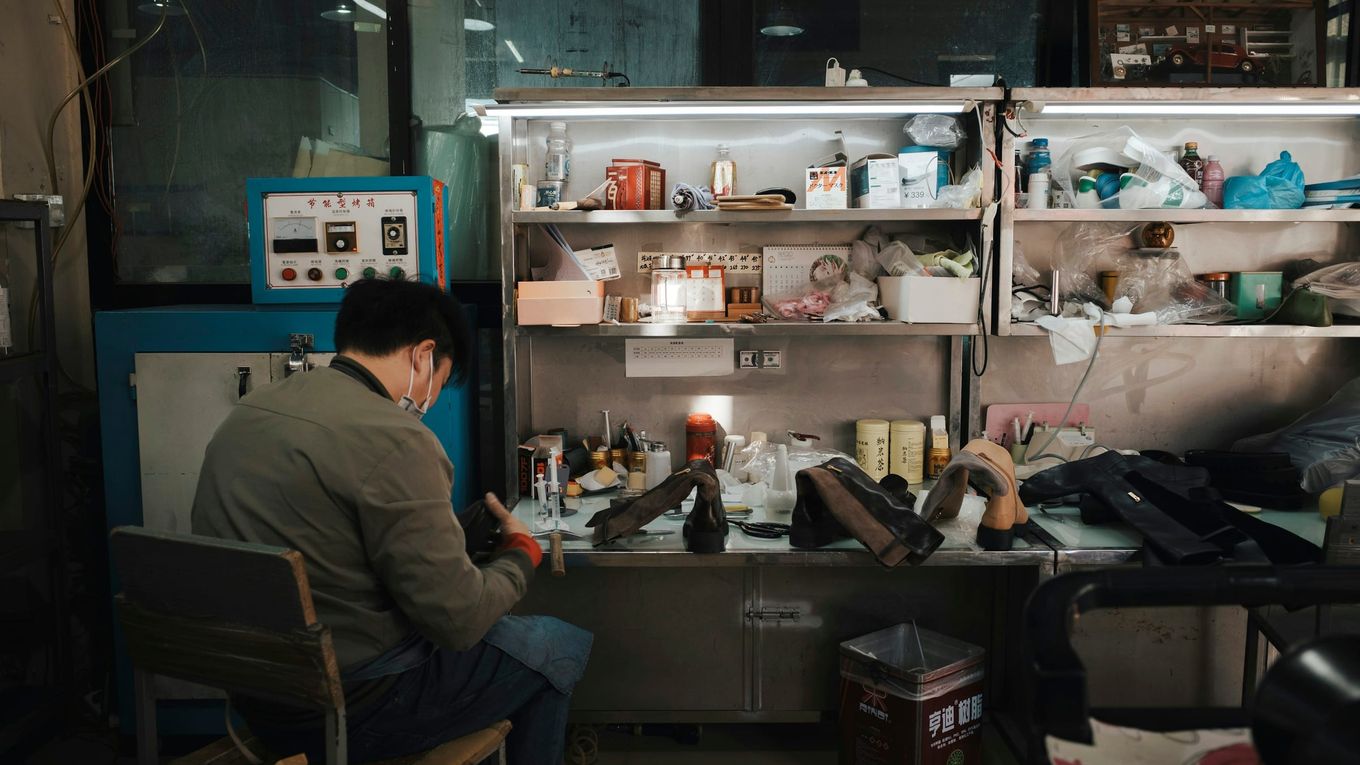
A minimum order quantity (MOQ) is the smallest order a factory will accept for one item, and it exists because part of the cost of every production run is fixed whether you order 50 units or 5,000. Small batches in China are realistic when the process needs little set-up, such as CNC (computer numerical control) machining, circuit board assembly, digital printing or stock products, or when you pay the set-up cost as a separate line.
This guide is general information and does not constitute legal or engineering advice; the factory or a test laboratory confirms what applies to your specific product.
Where a minimum order quantity comes from
Alibaba’s seller blog defines MOQ as “the lowest number of units a wholesale supplier allows buyers to purchase at one time” and says suppliers usually start from the product’s break-even point, then set the minimum above it to leave a margin (Alibaba.com). Four costs drive that break-even point.
Material minimums. Suppliers of raw material have their own lot sizes. Mills that weave and dye fabric set their own minimums and charge more for small runs because their machines run at a fraction of capacity (Visionise).
Machine set-up. A packaging maker describes one printed mailer job: two printing plates costing USD 1,300, about five hours of set-up for two people, and roughly 3,000 mailers’ worth of material spent before the print is right. The run itself then takes about two hours (EcoEnclose).
Tooling amortisation. Tooling means moulds, dies and fixtures made for your part. Its cost is divided across every unit you buy, so a small order carries a large share per unit.
Packaging print runs. Branded boxes, labels and manuals each run on their own set-up, so each can carry a minimum separate from the product’s.
MOQ by process
| Process | What drives the minimum | Fit for low volume | Published figure |
|---|---|---|---|
| Injection moulding (plastic forced into a steel or aluminium mould) | Mould cost | Only with aluminium or prototype moulds | Protolabs states no MOQ; its prototype moulds are guaranteed for at least 2,000 shots (Protolabs) |
| CNC machining (computer numerical control: a computer-driven tool cuts the part from a solid block) | Machine time; no part-specific mould | Good | “1 to 1,000,000 parts. No minimum.” with a lower part price as quantity rises (Protolabs) |
| PCB assembly (mounting components on a printed circuit board) | Set-up fee and solder-paste stencil | Good | JLCPCB starts at 2 boards (JLCPCB); PCBWay’s help page, last updated in 2020, states “Assembly MOQ is 1 piece” (PCBWay) |
| Cut-and-sew (garments and textile goods cut from fabric and sewn) | Fabric lots and line set-up, counted per style and per colour | Moderate | Australian apparel business Visionise, in an undated post read on 13 November 2026, gives 100 pieces per style per colour at most factories in China, Vietnam, Poland and India (Visionise) |
| Printing and packaging | Plates and press set-up for offset or flexographic printing | Good with digital printing | Packhelp starts custom-printed packaging from 30 units, depending on the product, and switches to offset or flexographic printing for much larger volumes (Packhelp); EcoEnclose sets 100 units for digitally printed boxes and usually 5,000 for press-printed ones (EcoEnclose) |
| Off-the-shelf ODM goods (original design manufacturer: the factory’s existing design under your brand) | Stock on hand; any custom colour, logo or box adds its own minimum | Good for stock items | Some Alibaba.com sellers list MOQs “as low as 5 or 10 units per order” (Alibaba.com) |
The pattern: processes without a part-specific mould or plate suit small batches, and a minimum climbs each time something is made for you alone.
How quantity and unit price trade off
Fixed cost divided by quantity gives the set-up share of each unit. Formlabs published one worked case: a mould for a small plastic latch cost USD 3,600, and 1,000 moulded parts cost USD 3,920 in total, against USD 600 for printing them in-house. For that part, moulding only became cheaper at 13,050 units (Formlabs). Formlabs sells printers, so read its figures with that in mind. Xometry, which offers both processes, puts the usual break-even between 250 and 2,000 parts (Xometry).
The same logic applies when a factory accepts a small order. An apparel maker notes that “no MOQ” offers “typically come with significantly higher per-unit pricing” (Visionise). The set-up cost is built into the unit price.
Legitimate ways to lower the minimum
Use stock materials and colours. Since cut-and-sew minimums count per colour, three colourways of one style triple your commitment. One standard colour keeps you at the base minimum.
Start from an ODM base or shared tooling. If the factory already owns a mould for a similar product, you avoid a new mould and its amortisation. Our guide to private label and contract manufacturing models explains who owns the design and tooling in each.
Pay set-up as a separate line. JLCPCB itemises its assembly set-up fee (USD 8.18 for its economic service, from USD 25.56 for standard) and stencil fee (JLCPCB). Ask other factories to itemise moulds, plates and line set-up the same way. Once set-up is paid, the factory has less reason to insist on volume. If you pay for a mould, put its ownership in writing.
Cut variants. Every extra size, colour, logo position or box version can carry its own minimum.
Ask for a sample run or trial order. Alibaba’s blog suggests asking whether a few units can be bought at retail price for testing (Alibaba.com). Visionise notes that the total order minimum generally does not apply to reorders, only the per-style one.
Low-volume routes before mass production
Prototype shops are on-demand manufacturers, such as Protolabs or Fictiv, that make parts in small quantities by CNC machining, 3D printing or quick moulding.
3D printing, or additive manufacturing, builds a part layer by layer from the digital file, with no mould at all. It wins at low quantities and loses once mould cost is spread thin, as the break-even figures above show.
Bridge tooling, also called soft or prototype tooling, is a mould in aluminium or unhardened steel with a limited life, used to make sellable parts until the production mould is ready. Fictiv puts its cost at 20 to 40 percent of a production tool and its range at up to about 10,000 units, with urethane casting, where resin is poured into silicone moulds, covering 1 to 300 units (Fictiv).
These routes often come before a Chinese factory. Aslan has no engineers, design service or test laboratory, so prototyping belongs with a prototype shop or design firm. Our injection moulding and CNC machining page covers the move to factory production.
Warning signs when a factory accepts any quantity
- The unit price barely changes between 50 and 5,000 units. Set-up cost is either hidden or the goods are stock from elsewhere.
- No mould, plate or set-up cost appears for a custom part.
- The supplier will not say where production happens. A 2011 article by a quality consultant warned that intermediaries get small runs made “in small workshops that are desperate for business” (QualityInspection.org).
- Visits and audits are refused. See how to verify a Chinese supplier and what a factory audit checks.
- The sample came from a different source than the production line will.
Aslan’s typical buyers spend from about EUR 200,000 a year, and a very small first order is usually better served by a prototype shop or a ready-to-ship supplier. For volumes that justify a factory search, see pricing.
Checklist for negotiating a minimum
- Ask for the MOQ per item, per colour, per size and per packaging version.
- Ask for moulds, plates and set-up as separate, itemised costs.
- Get unit prices at several quantity breaks, and compare total cost.
- Ask which materials and colours the factory keeps in stock.
- Ask whether an existing ODM product or mould can serve as your base.
- Put mould ownership and return terms in the contract.
- Agree the trial quantity and the reorder minimum before the first order.
- Approve a sample made on the production line.
- Confirm you are dealing with the factory that makes the product.
- Work out the landed cost at your real quantity.
Sources
- Alibaba.com seller blog: What is minimum order quantity (MOQ)? (19 November 2020)
- EcoEnclose: Minimum order quantities, what they are and why we have them (7 May 2021)
- Visionise: Understanding MOQ in clothing manufacturing (undated, read 13 November 2026)
- Protolabs: Injection molding service
- Protolabs: Production CNC machining
- JLCPCB: PCB assembly capabilities
- JLCPCB help: What does your PCB assembly price include? (updated 22 October 2026)
- PCBWay help centre: What's the min quantity of assembly? (last updated 2020)
- Packhelp blog: How to choose a packaging supplier for Q4 (25 August 2026)
- Formlabs: Race to 1,000 parts, 3D printing vs. injection molding (11 December 2024)
- Xometry: 3D printing vs. injection molding break-even (updated 29 June 2026)
- Fictiv: Bridge production manufacturing
- QualityInspection.org: Are your orders too small to buy in China? (23 June 2011)