A European startup gets a product made in China by working through the stages in order: define the product and its target cost, prototype it, protect the brand and design in China, choose and verify a factory, quote it properly, plan EU compliance, then pay for tooling, approve samples and inspect the first run. Each stage produces a document or object the next one depends on, so skipping a stage usually costs more than doing it.
This is general information and does not constitute legal advice; a test laboratory or notified body confirms which rules apply to a specific product.
Stage 1: define the product and its target cost
Write a specification: what the product does, materials, size, colours, packaging and expected first-year volume. Then work back from your retail price to the most you can pay the factory per unit. That target cost is the yardstick for every quote.
Stage 2: build a prototype, at home or in Shenzhen
Prototypes come in steps. Xometry, a manufacturing marketplace, describes five phases, from a concept model used to pitch the idea up to a low-volume run for early adopters, built mostly with 3D printing, CNC (computer-controlled) machining and urethane casting (Xometry). Its functional prototype is where the proof of concept “meets the industrial design”.
Plastic and mechanical products can be prototyped by European studios, close to you while the design still changes. Electronics differ. Duncan Turner, managing director of the hardware accelerator Hax, told IEEE Spectrum that in China, for electrical engineering and fast PCB (printed circuit board) manufacturing, “there’s just no other option” (IEEE Spectrum, October 2024). For an electronics product, prototyping in Shenzhen is worth pricing.
Aslan has no engineers, no design service and no test laboratory, so it cannot build your prototype. Bring a working design to the factory stage.
Stage 3: protect the idea before you share it
Register first, then talk to factories. The European Commission’s China IP SME Helpdesk explains that China follows a first-to-file system, so a trade mark belongs to whoever registers it there first, whatever you own in Europe (China IP SME Helpdesk, OEM guide). It reports a 2019 Supreme People’s Court ruling that goods made purely for export can still infringe a Chinese trade mark held by someone else.
- Trade mark. Applications go to CNIPA, the China National Intellectual Property Administration. Foreign applicants without residence in China file through a Chinese trade mark agent. Official fees and examination times change, so take both from CNIPA or your agent when you file. Register a Chinese-character version of your brand too (Guide to Trade Mark Protection in China).
- Design. CNIPA protects product appearance through design patents, and unregistered designs get no protection. The design must be new worldwide when you file, and protection lasts up to 15 years from filing under the Patent Law as amended in 2021. A Chinese filing within six months of an EU registered design can claim the EU date (Design Patent guide).
- Contract. Have candidate factories sign an NNN agreement: non-disclosure, non-use and non-circumvention. The Helpdesk advises making the Chinese text the official version, and warns that confidentiality agreements are “not fool-proof” without registered rights behind them. See what an NNN agreement in China protects.
Stage 4: choose the kind of partner
With ODM (original design manufacturer), you put your brand on a product the factory already makes, so most prototyping and tooling already exist, but other buyers can sell the same item. With OEM (original equipment manufacturing), the factory builds to your design and you usually pay for new tooling. A contract manufacturer assembles a product, often electronics, from your design and parts list, and may buy components for you.
Our guide to private label, OEM and ODM sets out who owns the design under each model; AI hardware contract manufacturing covers the electronics route.
Stage 5: find and verify factories
Trading companies often present themselves as factories; our guide on how to verify a Chinese supplier shows how to tell them apart.
The EU SME Centre recommends getting the business licence, checking that its name and business scope match your contract, confirming your contact may negotiate for the company, and checking that the bank account does not belong to an individual (EU SME Centre). It lists a demand for advance payment by bank transfer as a red flag and recommends hiring an auditor to inspect the goods on the ground in China (EU SME Centre, January 2026). A factory audit is the structured version of that check.
Outside its standing brush and vacuum cleaner factories, Aslan runs this stage as a factory search project quoted per project, paid by the buyer only: screening, visits to the shortlist, negotiation, samples and a ready-to-order file. Its typical buyers spend from about EUR 200,000 a year, so a very small first order is usually better served another way (pricing).
Stage 6: request quotations with a complete RFQ
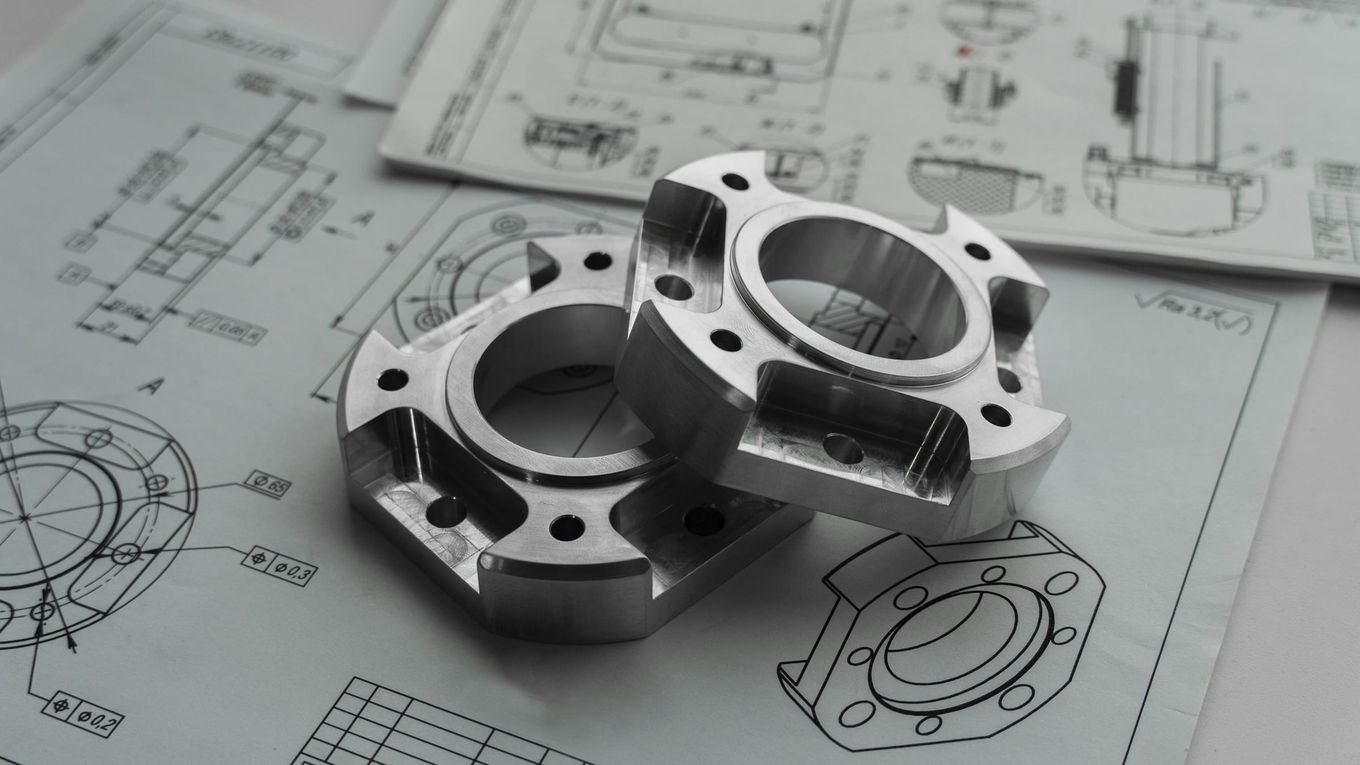
An RFQ (request for quotation) is the package that makes every factory quote the same product. Fictiv, a manufacturing platform, puts the minimum at a 3D model, usually a STEP file, and a 2D drawing giving key dimensions with their allowed variation, plus an assembly drawing with a BOM (bill of materials) where parts are assembled, and a revision number on every file (Fictiv).
For China, add the commercial points that set the price: materials and finishes, colours, packaging and labelling, quantities at two or three volume levels, delivery date and the EU rules the product must meet. Ask for tooling quoted apart from the unit price, and for the MOQ (minimum order quantity). If the MOQ is above your first order, see small-batch manufacturing and MOQs.
Stage 7: plan compliance before you pay for tooling
Settle which EU rules apply while the design is still cheap to change, before any mould is cut.
- CE marking. CE is the mark a manufacturer puts on a product to declare it meets EU rules that require it. The manufacturer identifies the requirements, checks whether a notified body (an independent body designated by an EU country) must test it, gathers evidence and signs an EU declaration of conformity, keeping the documents at least 10 years (Your Europe). See CE marking for a product made in China.
- GPSR. Under the General Product Safety Regulation, (EU) 2023/988, applying since 13 December 2024, whoever markets a product under their own name or trade mark is its manufacturer (Article 3(8)), must do an internal risk analysis and technical documentation before sale (Article 9(2)), and must put a name and postal and electronic address on it (Article 9(6)). An economic operator established in the EU must be responsible for it (Article 16(1)) (EUR-Lex). See authorised representative or responsible person.
- Batteries. The Batteries Regulation, (EU) 2023/1542, covers batteries built into products (Article 1(3)). Its requirement that portable batteries be removable and replaceable by the end user applies from 18 February 2027 (Articles 11 and 96) (EUR-Lex). Delegated Regulation (EU) 2026/1770, published on 22 October 2026, lets some product groups, among them certain wearables and, for a limited period, rechargeable electric toys, use batteries that only an independent professional can replace (EUR-Lex). Either way, it is a design decision.
- Radio. Products that intentionally emit or receive radio waves, Bluetooth and Wi-Fi included, fall under the Radio Equipment Directive 2014/53/EU, with conformity assessment procedures in Article 17 (EUR-Lex). Our EU compliance guide for AI wearables and connected devices covers the cybersecurity rules.
Stage 8: tooling, and who owns it
Tooling means the moulds, dies and fixtures made for your product. Protolabs, a moulding company, describes aluminium “soft” tools as suited to prototypes and low to medium volumes, lasting thousands to tens of thousands of cycles, and hardened steel tools as lasting hundreds of thousands to millions, at higher upfront cost and lead time (Protolabs, 2026). Its own US prices start at $1,500 for aluminium and run to $50,000 or more for steel (Protolabs, 2025). Chinese toolmakers price differently; use these for scale only. See injection moulding and CNC machining in China.
The China IP SME Helpdesk calls tooling disputes “among the most common sources of contention” and notes manufacturers often refuse to return tooling unless a contract penalty compels them. List every mould, state that you own it, and say how it is returned or destroyed when the relationship ends.
Stage 9: samples and the golden sample
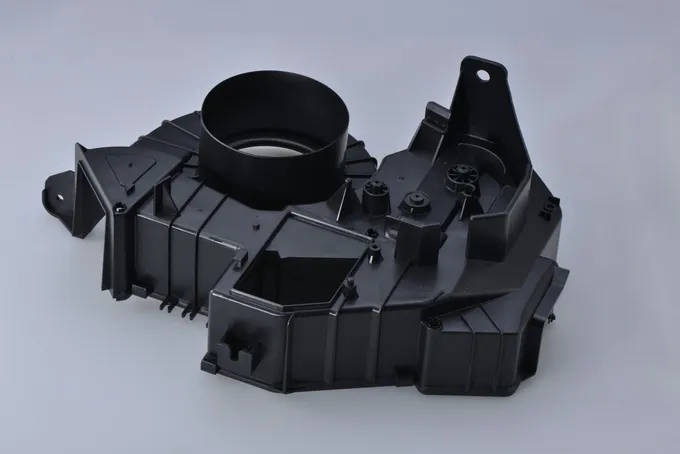
The factory sends pre-production samples; you approve or reject them until one passes. That approved piece is the golden sample, the go-ahead signal for production in the words of an inspection firm’s article published by HKTDC, the Hong Kong Trade Development Council. Copies should be signed, dated and sealed, kept by you, the factory and the inspector, who compares production goods against it (HKTDC Newsbites).
Stage 10: first production run, inspection and shipping
Book an inspection before paying the balance. In a pre-shipment inspection, an inspector draws random units under AQL (acceptance quality limit) sampling and compares them with the golden sample and your specification, at the factory or the port.
Then work out landed cost, the factory price plus everything paid to get goods to your warehouse; our landed-cost worked example lists every component.
Budget lines to plan for
Amounts depend on the product, so get a quote for each line before committing.
| Cost category | When | Paid to |
|---|---|---|
| Design and engineering | Before Stage 2 | Design or engineering firm |
| Prototypes | Stage 2 | Prototype shop, several rounds |
| Trade mark and design filings in China | Stage 3 | CNIPA fees plus agent |
| Contract and NNN review | Stages 3 to 8 | Lawyer qualified in China |
| Factory search, visits, audit | Stage 5 | Agent or auditor |
| Testing and certification | Stage 7 | Test laboratory, notified body if required |
| EU responsible person | Before sale | EU-based operator |
| Tooling | Stage 8 | Factory or toolmaker |
| Samples and their freight | Stage 9 | Factory, courier |
| First order | Stage 10 | Factory, deposit and balance |
| Inspection | Stage 10 | Inspector |
| Freight, duty, VAT, delivery | After shipment | Forwarder, customs |
Who should not manufacture in China yet
No validated demand. If nobody has paid for the product, an MOQ-sized order turns a market test into stock. Take pre-orders or start with an ODM product first.
Budget below tooling plus a first order. If tooling alone uses most of your money, nothing is left for testing, inspection or a second batch. Start with existing moulds through ODM, or with 3D printing and urethane casting in Europe.
A product that changes every week. Factories quote and tool against a frozen design. Keep prototyping near your team until you can sign the design off.
Checklist before your first order
- Specification and target cost written
- Prototype tested by real users
- Trade mark filed in China, Chinese-character version included
- Design patent filed before the design is shown
- NNN agreement signed, Chinese text official
- Business licence, signing authority and bank account checked
- RFQ with model, drawings, BOM, revisions, quantities and packaging
- EU rules and test plan settled before tooling
- Tooling ownership and return in the contract
- Golden sample signed and sealed
- Pre-shipment inspection booked, landed cost calculated
Sources
- European Commission, China IP SME Helpdesk: Guide to IPR protection in China for the OEM industry (30 June 2022)
- European Commission, China IP SME Helpdesk: Guide to Trade Mark Protection in China (last update January 2021)
- National People's Congress: Decision on amending the Patent Law of the People's Republic of China (17 October 2020, in force 1 June 2021)
- European Commission, China IP SME Helpdesk: Understanding and using China's Design Patent (25 August 2021)
- EU SME Centre: How to conduct primary due diligence in China
- EU SME Centre: Simple steps to minimise risks of being scammed when purchasing from China (12 January 2026)
- Your Europe: CE marking (last checked 17 July 2026)
- Regulation (EU) 2023/988 on general product safety, EUR-Lex
- Regulation (EU) 2023/1542 on batteries, EUR-Lex
- Commission Delegated Regulation (EU) 2026/1770 on derogations for the removability and replaceability of portable batteries, EUR-Lex (OJ 22 October 2026)
- Directive 2014/53/EU, Radio Equipment Directive, EUR-Lex
- Xometry: 5 key prototyping phases (updated 3 September 2026)
- IEEE Spectrum: interview with Hax managing director Duncan Turner (23 October 2024)
- Fictiv: How to prepare your request for quote package (15 October 2017)
- Protolabs: Soft vs. hard tooling, aluminum vs. steel molds (25 August 2026)
- Protolabs: Aluminum vs. steel tooling (12 December 2025)
- HKTDC Newsbites: What is a golden sample in manufacturing (30 June 2023)